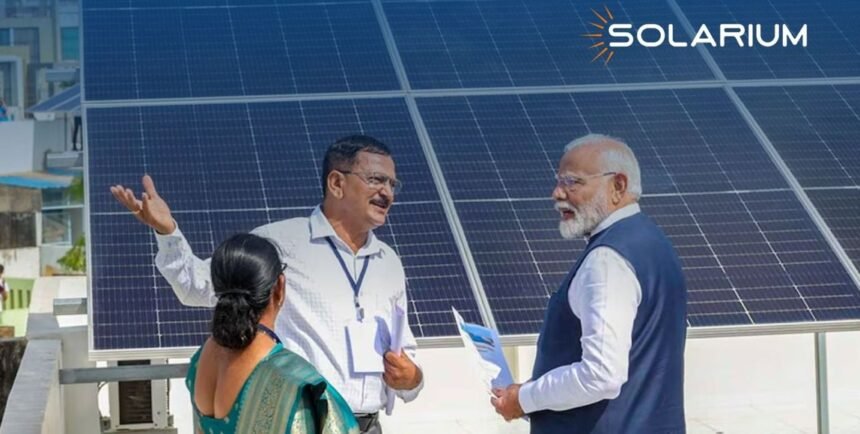
The Union Budget 2026–27 makes the government’s priority unmistakably clear: residential solar is now at the center of India’s energy transition.
PM Surya Ghar Muft Bijli Yojana has been allocated ₹22,000 crore, which alone accounts for 66.8% of the entire MNRE budget. What this really means is that the largest share of public money in renewables is going directly toward Indian households, not utility plants or future technologies.
Let’s break it down. This allocation has increased from ₹17,000 crore in the previous year to ₹22,000 crore today, creating nearly 30% more financial headroom for residential installations. That’s a strong signal that the government expects real scale, not just pilot projects.
From where we stand at Solarium, this aligns perfectly with our strategy. We have always believed that residential solar adoption will be driven house by house, neighborhood by neighborhood, with strong execution on the ground. This budget reinforces that belief.
Over the past year, we’ve seen how quickly homeowners move when the process is simple, transparent, and reliable, especially in states like Gujarat and Uttar Pradesh. The increased budget strengthens this momentum and gives the sector a much clearer runway for growth.
In response, we are expanding rapidly to serve this rising residential demand. We are scaling our design capabilities, installation capacity, financing partnerships, and after-sales support so more homes can switch to clean, affordable solar without friction.
Here’s the thing. Residential solar in India is no longer experimental. It is becoming mainstream. And this Budget firmly places it at the heart of that shift.