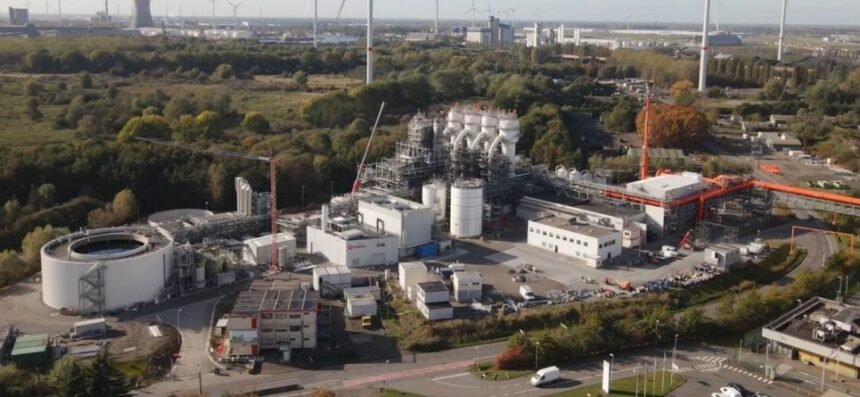
Lanza Tech Global, a carbon recycling company, has been awarded a contract by Spray Engineering Devices (SED), a provider of sustainable energy solutions, to build a next-generation carbon recycling facility using sugarcane bagasse, a widely available agricultural waste product, for the production of sustainable fuels and chemicals.
The facility, projected to process up to 300 tons per day of bagsese, will be in the state of Uttar Pradesh, India, and is a key component of the “SED Smart Village” concept. The SED Smart Village framework is designed to capture the full economic value of renewable power and carbon resources. The model anticipates that abundant low-cost power will shift carbon demand toward high-value products like green chemicals, polymers, aviation fuels and e-fuels.
In addition, the Lanza Tech project is expected to generate nutrient-rich biochar (5-10 per cent), achieving permanent carbon sequestration and improving soil fertility.
Vivek Verma, MD, Spray Engineering Devices (SED) stated, “Modern agriculture is poised for a significant transformation through green solar power and hydrogen, which will create boundless opportunities for rural economies. India’s year-round solar potential, fertile land and growing energy demand position it uniquely for a low-cost renewable energy future. As solar, wind, battery and storage technologies mature, electricity costs are expected to decline significantly, supported by distributed energy storage. The critical element is ensuring biomass processing and nutrient recycling occur locally to preserve soil health and strengthen rural economies. By utilising non-food agricultural biomass and animal waste as carbon feedstock, we can both decarbonise agriculture and create a sustainable hydrocarbon ecosystem”.
Lanza Tech equips industrial facilities with bioreactor hardware that captures carbon-rich gases at the source, before they are emitted into the atmosphere. Inside the bioreactor, LanzaTech’s technology works like a brewery, but instead of using yeast to convert sugar into bees, proprietary microbes convert carbon-rich gases, including 002 coupled with green H2, to ethanol, a key building block for the production of consumer goods and sustainable fuels, including sustainable aviation fuel (including e-fuels) and renewable diesel.
By leveraging the existing supply chain, the facility will divert bagasse/biomass wastes from being burned and enable local production of sustainable fuels, green organic chemicals and raw materials. This innovative approach supports circular economies, reduces greenhouse gas emissions and helps build a more resilient future for sugarcane-growing communities. The plant will have an annual CO2 abatement capacity of approximately 19,200 tonnes of CO2 equivalent per year and is expected to begin operations within two years.
This project will mark one of the first instances of a private company developing an ethanol project, using sugar industry by-product bagasse, under the PM JI-VAN Yojana, an Indian government programme designed to support the production of advanced bioethanol from agricultural and other industrial waste.
Dr. Jennifer Holmgren, LanzaTedis CEO and member of the US-India Strategic Partnership Forums (USISPF)’s Board of Directors, added, “Our partnership with SED for this project expands our footprint in India while creating a roadmap for commercial deployment of agricultural residue as a key feedstock for producing ethanol. Waste-based feedstocks can support Prime Minister Modi’s Make in India initiative by boosting the regional domestic manufacture of essential goods and materials. What’s better for the environment can also be better for business.”
In India, LanzaTech’s carbon recycling technology is already deployed at Indian Oil Corporation’s Panipat facility using refinery off-gases, the sixth commercial scale plant using LanzaTech’s technology worldwide. A 10 ton per day ethanol production unit by NTPC from waste CO2 and green H2 is under advanced stage of execution at NTPC’s Pudimadaka site in Andhra Pradesh.
LanzaTech to Develop Next-Generation Carbon Recycling Plant Using Sugarcane Bagasse