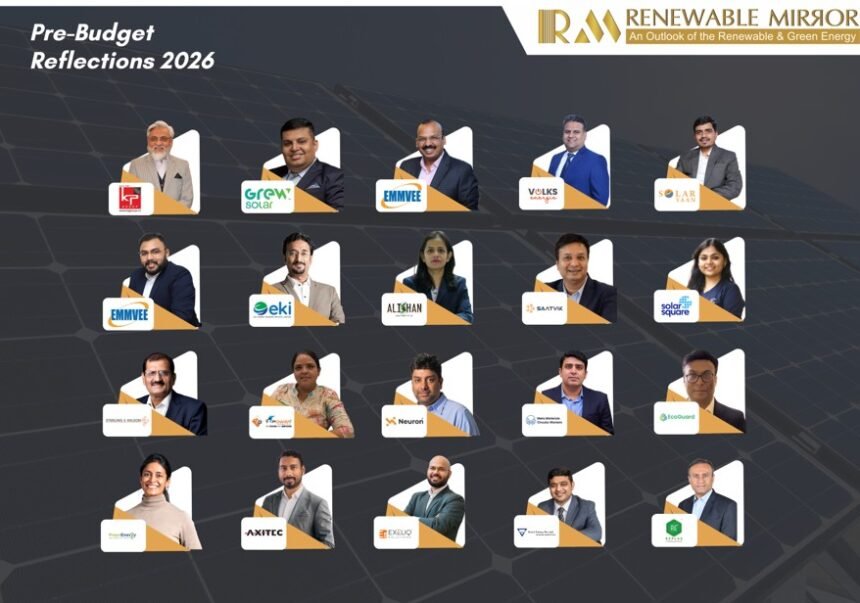
As India approaches the Union Budget, the renewable energy and power sector once again finds itself at an important inflection point. With clean energy targets becoming more ambitious and the sector playing an increasingly central role in economic growth, infrastructure development, and energy security, expectations from the Budget are high across the industry.
Over recent years, policy support has helped accelerate renewable capacity addition, encourage domestic manufacturing, and attract sustained investment. At the same time, evolving challenges—ranging from financing and grid integration to supply-chain resilience and system reliability—have brought renewed focus on the need for long-term clarity and balanced fiscal support.
For industry leaders, the forthcoming Budget is viewed as an opportunity to reinforce momentum while addressing structural gaps that could impact execution at scale. Areas such as transmission infrastructure, energy storage, power quality, and manufacturing competitiveness are expected to feature prominently in industry expectations.
Industry Speak: Pre-Budget Expectations:


Dr. Faruk G. Patel, Founder, Chairman & Managing Director of KPI Green Energy, said “India’s renewable energy journey is transitioning into an era of innovation, scale, and economic opportunity. In 2025 alone, the country added around 48–50 GW of renewable capacity, backed by approx ₹2 trillion in investments, taking its total non-fossil fuel capacity to about 262–263 GW, a remarkable momentum toward the 500 GW by 2030 target.
With over 6 GW of capacity today and ambitious plans to reach 10 GW by 2030, KP Group is proud to be at the forefront of this clean energy transformation, deploying hybrid systems, storage solutions, and expanding into green hydrogen.
In the upcoming Budget 2026, we look forward to continued policy support that accelerates the deployment of hybrid energy systems, energy storage, and green hydrogen value chains. Strengthening incentives for domestic manufacturing of clean energy components, enhancing tax clarity for novel technologies, and establishing robust capital support mechanisms, such as viability gap funding, will not only sustain investor confidence but also propel India’s global leadership in renewables — creating jobs, strengthening energy security, and driving long-term economic growth.”


Mr. Vinay Thadani, Director and CEO, GREW Solar, said “As India enters a phase of large-scale renewable deployment, Budget 2026 needs to move beyond a sole focus on capacity addition and pay closer attention to the ecosystem that supports sustained growth. While Budget 2025 increased allocations to the renewable sector through higher MNRE funding, initiatives such as PM Surya Ghar and PM-KUSUM, and continued support for green energy corridors and distribution reforms, some gaps remain. Access to long-term, affordable financing for manufacturing and project development is still limited, particularly for emerging players. IIn addition, more stable and predictable policy frameworks around tariffs, incentives and project contracts would help improve investor confidence. Addressing these areas in the next budget would strengthen the foundations of India’s renewable energy growth and support a more reliable transition at scale.”


Mr. D.V. Manjunatha, Founder and CMD, Emmvee Photovoltaic Power Limited, said “This Union Budget, the manufacturing industry could genuinely benefit from this one change that could unlock the next phase of investment – reintroduction of 80% depreciation for new manufacturing facilities. There is no denying that Manufacturing is capital-intensive by nature. Whether it’s setting up new plants, upgrading machinery or investing in automation, companies need strong incentives to commit long-term capital.
For businesses, depreciation is not merely an accounting concept; it directly affects how and when we invest. Faster depreciation reduces the real cost of setting up factories and makes it easier to invest in critical upstream areas such as components, materials, tooling and advanced manufacturing capabilities. These are exactly the areas India needs to strengthen if we want to reduce imports and build resilient supply chains. With interest rates still elevated and input costs volatile, easing the upfront tax burden can make a real difference to Make in India initiative. “


Suhas Donthi, CEO, Emmvee Photovoltaic Power Limited, quoted “While Budget 2025 strongly supported deployment in especially residential solar, there is an opportunity to further strengthen the structural enablers required for long-term scale. Areas such as manufacturing depth, grid readiness, and access to affordable financing for manufacturing will be increasingly critical and merit greater attention going forward.
As India progresses from around 260 GW today toward the ambitious 500 GW target by 2030, these elements become even more important. At the same time, sustained support for R&D in solar technologies essential for improving efficiency, reducing costs, and building global competitiveness, also need deeper consideration.
In essence, a more holistic focus on ecosystem-level investments will be key to supporting the next phase of growth and from this budget, we look forward to such moves. “


Mr. Chandra Kishore Thakur, Global CEO, Sterling and Wilson Renewable Energy Group, said “As we look ahead to the Union Budget 2026, the renewable energy sector anticipates measures that streamline regulatory approvals and land acquisition processes for large-scale projects. Enhanced budgetary support for transmission line development and evacuation infrastructure will be essential to align execution timelines with national targets. A policy focus on single-window clearances and dedicated transmission funding will support MNRE’s drive towards 500 GW by 2030, bridging existing gaps in connectivity and infrastructure planning.”

Mr. Piyush Goyal Co-Founder & CEO, Volks Energie, commented “The Indian renewable energy sector today has evolved to a stage where the transition to clean energy is no longer a discussion; rather, rightfully, it has moved to the efficiency and reliability of that transition. The same questions need to be addressed in the upcoming union budget. While budget 2025 focused on momentum building, the focus now must be on the removal of operational bottlenecks.
A clear example of such an area is energy storage. With storage requirements expected to grow exponentially in line with the generational capacity, the viability gap funding announcement shall require an overhaul. What the industry now looks forward to is a clear and viable deployment roadmap which also incorporates use cases, tender timelines and offtake mechanisms. Such an announcement or initiative shall alone unlock faster investment decisions.
Another pressing issue is the grid readiness. Over 30 GW of renewable connectivity remains underutilized, majorly due to delays in PPA’s and transmission alignment. The budget should focus on creating an ecosystem which accelerates approvals, provides for stronger intra-state transmission and better coordination.
Financing remains a constant challenge despite consistent falls in technology costs. The cost of capital for renewable, storage and C&I projects still remains higher than conventional infrastructure. Concessional financing, credit enhancement and payment security mechanisms will directly translate to reduced TATs and faster deployments.
What has been a clear miss in the renewable energy conversation and policies has been the focus on demand-side efficiency. Cooling accounts for close to 40% of electricity consumption in commercial buildings. Incentivising the integration of high-efficiency HVAC systems which are integrated with solar and storage will work towards reduction in peak demand and lower energy bills. A budget that links generation, grids, storage, and consumption will not just support renewables; it will accelerate execution.”


Mr. Manish Dabkara, Chairman and Managing Director, EKI Energy Services and President Carbon Markets Association of India, said “Budget 2026-27 is an opportunity for India to move from climate ambition to climate execution. Our net-zero pathway demands that green priorities are not confined to vision statements but embedded into the mechanics of public finance. Introducing a comprehensive Climate Financing Statement, linked to a clear national climate taxonomy, would allow policymakers and markets alike to see how budgetary allocations truly support mitigation, adaptation and hard-to-abate sectors. This level of fiscal clarity is essential to build trust, prevent greenwashing and attract long-term ESG capital.
But transparency alone will not deliver the transition. The budget must also strengthen the engines of green growth. Continued support for renewable energy, grid resilience and energy storage, including incentives for domestic battery manufacturing, is critical to securing clean energy supply chains and reducing import dependence. Targeted measures for green manufacturing, EV mobility and sustainable buildings can further integrate climate action into the real economy and job creation. India’s carbon markets should be nurtured as a parallel pillar, with policy certainty that encourages high-integrity projects and enables private capital to complement public finance in delivering emission reductions and removals at scale.
If these levers come together, Budget 2026-27 can position climate action not as a constraint on growth, but as a strategic pathway to competitiveness, resilience and long-term economic strength.”

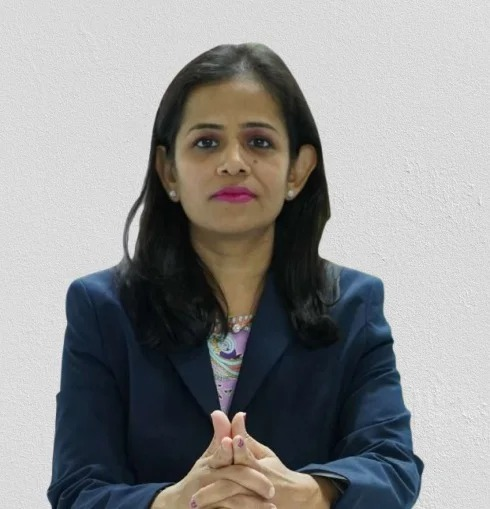
Dr. Khushbu Patel, Assistant General Manager, Alishan Green Energy, commented, “In the past few years, we have seen a positive development in buying Made in India products due to not only policies but also due to the patriotism and values that we all Indians possess. As far as the encapsulation business is concerned, I personally believe that adding up import duties is not the sustainable way to inculcate domestic support; rather, businesses must come forward with a common mission and mindset to develop reliable solar modules by joint R&D, key problem-solving and patent filings. For this, governments must form a scheme where EPCs and IPPs can earn extra value/priority if they have supported such activities.”


Mr. Prashant Mathur, CEO, Saatvik Green Energy Limited, said ”The Indian solar industry is at the threshold of a quantum leap from 135 GW capacity in 2025 to over 300 GW by 2030, making it the single largest contributor to India’s ambitious 500 GW non-fossil fuel energy target. We strongly advocate for an enhanced PLI scheme specifically for polysilicon, ingot, and wafer manufacturing. This targeted approach will enable India to rapidly establish critical upstream capabilities and reduce our heavy dependence on imports, particularly from China which controls over 80% of global solar manufacturing. Beyond PLI, we urge the government to introduce accelerated depreciation benefits for solar manufacturing equipment, similar to those provided for solar projects, which will significantly improve capital efficiency and returns. Additionally, reduced corporate tax rates for solar manufacturers and preferential lending rates through priority sector lending would enhance competitiveness and attract greater investments. These comprehensive policy measures will be instrumental in building a self-reliant, globally competitive solar manufacturing ecosystem that truly embodies Atmanirbhar Bharat.”


Ms. Shreya Mishra, CEO, SolarSquare, commented, “India has 26 crore homes with an electricity connection, and the residential segment accounts for one-fourth of the country’s electricity consumption. In 2023, India announced a subsidy scheme to solarise one crore homes, out of which 30 lakh homes are expected to be covered by March 2026. My hope with this Budget is that the subsidy is extended to another 50 lakh to one crore homes—this time for solar paired with batteries. This would be transformative in making India energy-independent and help the country move away from free electricity politics, towards a more sustainable model where people make their own free electricity.”


Mr. Manoj Patel, MD & CEO, Solaryaan, quoted, “Opportunity to accelerate the renewable energy transition. A strong focus on scaling solar and hybrid renewable projects through enhanced budgetary allocations, long-term policy stability, and faster regulatory clearances will be essential. Priority should be given to strengthening incentives such as viability gap funding, concessional financing, and targeted tax benefits to catalyse clean energy investments, especially for MSMEs and distributed solar adoption across urban and rural markets. Continued support for domestic manufacturing under the PLI framework, along with dedicated incentives for energy storage, green hydrogen, advanced inverters, and grid modernization, will be crucial to ensure reliability, affordability, and self-reliance. Additionally, rationalising GST structures, improving access to low-cost capital, and enabling faster disbursement of project financing can significantly enhance project viability. A progressive, forward-looking budget can unlock sustainable growth, create green employment, and reinforce India’s clean energy leadership.”


Mr. Jay Patel, Director, and Knack Energy Private Limited, said, “As we await the Union Budget 2026, the renewable energy sector hopes for measures that make clean power easier to deliver, not just generate. Faster transmission grid expansion will play a key role in moving renewable energy across states and supporting India’s 500 GW vision by 2030.”


Mr. Pratik Kamdar, Co-founder & CEO, Neuron Energy, said “India’s electric mobility journey has reached a critical inflection point. Adoption is accelerating, manufacturing capacity is expanding, and policy intent has been consistent. However, the next phase of EV growth will not be defined by headline adoption numbers alone. From a manufacturing standpoint, this budget comes at a time when India’s EV and battery ecosystem is moving from early adoption to real scale. Demand for lithium-ion batteries is growing rapidly, with the market projected to expand at close to a 39% CAGR through 2030, driven by EVs and renewable energy storage. To support this growth, manufacturers need timely execution of PLI incentives, easier access to long-term capital, and faster approvals on the ground. Workforce skilling, testing infrastructure, and stronger domestic supply chains will decide how quickly plants stabilise. A budget that backs localisation, R&D, and recycling will help the sector scale sustainably and reduce long-term import dependence.”

Nitin Chitkara, CEO, Meta Materials Circular Markets (MMCM), commented, “As India moves towards becoming a developed nation, circularity must be treated as core economic infrastructure, not a side policy. True superpower status will not be defined only by financial growth, but also by clean air, clean water, and resource efficiency. This Budget presents a critical opportunity to accelerate a high-circularity ecosystem by rationalising GST on products and services pertaining to recycled materials, an example being the government-issued Certificates of Deposit on end-of-life vehicles. Incentivising formal, traceable recycling will not only strengthen domestic supply chains but also position India as an emerging environmental superpower.”

Mr. Yashodhan Ramteke, CEO, EcoGuard, quoted “India’s hardest-to-abate sectors such as steel, cement, aluminium, chemicals, and power are at the centre of the country’s carbon market transition, but they are also absorbing disproportionate technology, capital, and data risks in the early years of compliance. These industries are being pushed to invest in efficiency upgrades, process changes, and emissions measurement well before carbon prices are fully visible or stable. That creates pressure. Time-bound fiscal incentives tied to verified emissions cuts, strong MRV deployment, and outcome-based decarbonisation support can close this gap. The goal is simple. Early movers should not be punished for acting first. Decarbonisation should reinforce industrial competitiveness rather than erode it. From 2026 onward, carbon intensity will increasingly function as a trade parameter rather than a sustainability disclosure, particularly with mechanisms like the EU’s Carbon Border Adjustment Mechanism coming into force. For Indian exporters, competitiveness will depend on the ability to provide granular, verified emissions data with clear audit trails that link carbon performance to physical goods. A well-structured domestic carbon pricing and measurement ecosystem can soften CBAM exposure, reduce the risk of double taxation, and help Indian industry compete in carbon-constrained markets. Policymakers should focus on alignment. India’s carbon market architecture must meet global standards for verification and traceability so that decarbonisation becomes a trade advantage instead of a trade barrier.”


Radhika Choudary, Co-founder & Director, Freyr Energy, said, “From the upcoming Union Budget, we expect a strong and continued policy push toward accelerating India’s clean energy transition, with a sharper focus on decentralised renewable energy. Enhanced budgetary allocations, stable long-term incentives, and easier access to low-cost financing for rooftop solar and storage solutions can significantly improve adoption across residential, MSME, and rural segments. While utility-scale renewable energy has scaled rapidly, the next big opportunity lies in distributed and rooftop solar, coupled with energy storage and grid modernisation. These segments are critical to improving grid resilience, reducing transmission losses, and enabling energy access in semi-urban and rural India. Targeted incentives for battery storage, domestic manufacturing of solar components, and digital energy platforms can further strengthen this ecosystem. To make solar India’s most competitive energy source, the Budget can support interest subvention schemes, simplified GST structures, and faster approvals for rooftop installations. Encouraging innovation through R&D incentives and promoting indigenous technologies will also help lower costs and improve efficiency, ensuring solar remains the backbone of India’s clean, affordable, and self-reliant energy future.”

Kaushik Tanti, Chief Operating Officer, REPLUS, said, The Ministry of Power approved a new VGF scheme for 30 GWh BESS capacity in June 2025, allocating Rs 5,400 crores from the PSDF fund. We expect Ministry of Power to allocate similar VGF funds to support additional set up of 100 GWh BESS capacity. Under Atma Nirbhar Bharat initiatives extend PLI scheme for Battery energy storage ecosystem, including manufacturing of anode, cathode and BESS. As we approach the Union Budget, the industry looks forward to continued support for India’s clean energy transition. We urge an expansion of the existing VGF framework for Battery Energy Storage Systems to enable large-scale grid storage and renewable integration. With FAME II concluding, a successor EV incentive framework is essential to sustain adoption, especially in mass-market segments. Overall, continued focus on clean, reliable, and affordable energy will be critical to achieving India’s long-term energy and climate goals.”


Tanmoy Duari, CEO, AXITEC Energy India Pvt. Ltd, quoted, “As India accelerates towards its 500 GW non-fossil fuel target, Budget 2026 presents a critical opportunity to further strengthen domestic solar module manufacturing. While initiatives like PLI have laid a strong foundation, the next phase must focus on long-term competitiveness. We urge the government to extend and deepen incentives for fully integrated manufacturing, from ingots and wafers to high-efficiency modules, along with rationalised customs duties on critical raw materials not available domestically. Additionally, access to low-cost, long-tenure financing and infrastructure support for manufacturing clusters will be vital to scale capacities and reduce cost pressures. Budgetary support for R&D, advanced technologies such as TOPCon and HJT, and skilling programs will help Indian manufacturers compete globally while ensuring quality and reliability. At AXITEC Energy India, we believe a stable and forward-looking policy framework in Budget 2026 can transform India from a manufacturing alternative into a global hub for high-efficiency solar modules.”


Ms. Neeru Yadav, Director, T Power Group, said “As the Union Budget approaches, the power and renewable energy sector looks forward to policy measures that strengthen India’s transmission and distribution infrastructure. With rising renewable integration, there is an urgent need to modernize grids, upgrade transformers, and encourage adoption of high-efficiency, ISI-certified equipment to reduce technical losses. Continued focus on domestic manufacturing under Make in India, along with production-linked incentives for electrical equipment, will enhance quality, reliability, and global competitiveness. Rationalization of GST on electrical components, faster payments from DISCOMs, and increased allocation for R&D and skill development will further support sustainable growth. We also expect the Budget to accelerate investments in smart grids, energy storage, EV charging infrastructure, and green hydrogen, ensuring a resilient, future-ready power ecosystem aligned with India’s net-zero goals.”
As these perspectives reflect, the industry’s outlook ahead of the Union Budget is shaped by a blend of optimism and pragmatism. While growth prospects remain strong, stakeholders are keen to see policy measures that ensure stability, encourage innovation, and support sustainable expansion across the renewable energy value chain.
Looking ahead, the Union Budget is expected to serve as a key reference point for investment decisions and strategic planning in the year to come. The signals it sends will influence not only near-term confidence but also the pace at which India’s clean energy ambitions translate into resilient, future-ready infrastructure.