




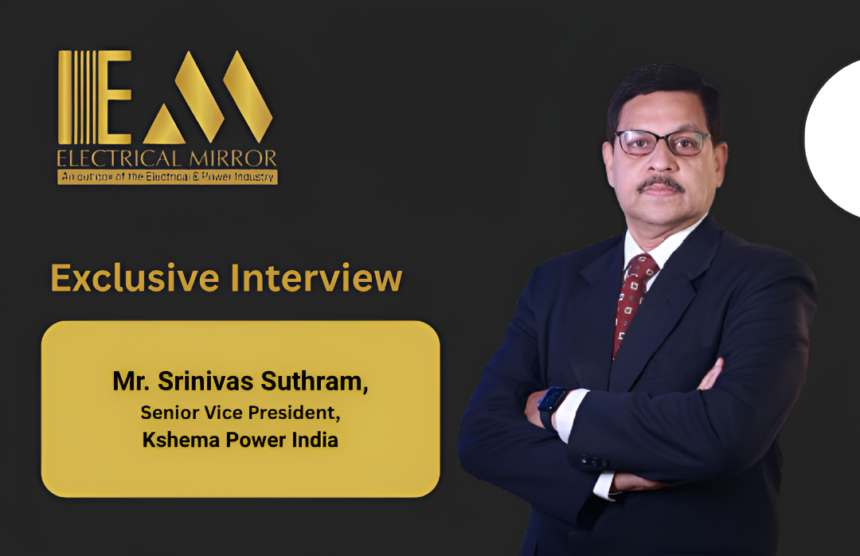
1. Kshema Power has executed large utility-scale wind and power transmission projects across India. How has the company’s approach to EPC and project execution evolved to meet the growing demands of the wind energy sector and transmission & distribution infrastructure?
As wind and power transmission projects have grown in scale, expanded across diverse terrains, and faced increasing grid constraints, execution complexity has risen significantly. Projects today span remote, high-altitude, coastal, and difficult-access regions, where challenges related to land, logistics, permissions, and evacuation readiness often define timelines more than turbine installation itself.
In response, Kshema Power India has evolved from a standalone EPC executor to an integrated, planning-led organisation. We now approach wind generation and transmission as a unified delivery model, identifying and managing risks related to land access, logistics planning, ROW approvals, transmission corridors, and grid availability from the earliest stages of a project.
Our execution models have been continuously refined through hands-on experience across multiple regions of India. This multi-region exposure has strengthened internal processes, vendor coordination, and on-ground decision-making. The focus remains on designing for constructability, improving predictability, and ensuring timely delivery while maintaining the highest standards of quality and safety.
2. Quality, safety, and timely delivery are critical in utility-scale renewables. What processes and technologies does Kshema Power deploy to ensure excellence across the project lifecycle, from design to commissioning?
Utility-scale renewable projects operate under tight timelines, complex site conditions, and coordination across multiple contractors, making quality, safety, and timely delivery critical priorities. At Kshema Power India, these elements are embedded from the earliest design and planning stages, rather than treated as downstream checks. Design reviews focus on constructability, safety, and execution sequencing to reduce on-site risks and rework.
Our QHSE systems are aligned with international standards and global compliance norms, ensuring consistency across projects and geographies. On the ground, strong site governance frameworks are supported by regular audits, digital reporting, and rigorous contractor onboarding and oversight. Safety protocols, training programs, and toolbox talks are enforced consistently across all project sites.
To meet aggressive schedules, we adopt parallel planning across design, procurement, and execution, enabling early identification of risks and faster decision-making. This integrated approach ensures that quality, safety, and delivery timelines remain aligned throughout the project lifecycle from design to commissioning.
3. With wind capacity additions rising rapidly and grid connectivity becoming increasingly critical, balancing cost efficiency and performance is key. How does Kshema Power innovate across wind EPC and transmission & distribution projects to drive greater value for developers and power producers?
With rising material costs and evolving grid requirements, balancing cost efficiency with long-term performance has become central to project economics in the wind and transmission sector. At Kshema Power India, innovation is driven through value engineering that focuses on lifecycle performance rather than only upfront capital costs. Design and execution decisions are evaluated for their impact on reliability, losses, and operational efficiency over the project’s full life.
Our core services span Wind EPC, Solar EPC, Transmission Lines, and Substations, delivering end-to-end engineering, procurement, and construction solutions with a strong focus on efficiency, safety, and quality. A key differentiator is our integrated approach to wind EPC and transmission planning, which reduces rework, interface losses, and commissioning delays.
Our experience with ISTS and inter-state connectivity projects further strengthens our ability to navigate complex grid requirements and regulatory frameworks. This combination of technical optimisation, integrated planning, and grid expertise enables us to deliver greater value, predictability, and performance for developers and power producers.
4. Operations and maintenance (O&M) play a vital role in the long-term performance of wind assets and transmission infrastructure. Can you share insights on Kshema Power’s O&M services and how data or digital tools are leveraged to optimise asset reliability and plant output?
Operations and maintenance are critical to ensuring the long-term reliability and performance of transmission and substation infrastructure, where system uptime directly impacts efficiency and returns. In the future, We plan to offer O&M services for PSS and EHV systems, extending our EPC expertise into the operational phase.
This initiative will focus on developing structured maintenance processes, skilled field teams, and digital monitoring frameworks to track asset health, detect potential issues early, and enable proactive interventions. By prioritizing reliability and operational efficiency, it aims to reduce unplanned outages and ensure consistent long-term performance for power producers and developers.
5. India’s renewable energy targets and policy frameworks continue to evolve. How does Kshema Power stay ahead of regulatory shifts, market trends, and emerging technologies?
India’s renewable energy landscape is shaped by evolving policy frameworks, frequent regulatory updates, and changing market dynamics that directly impact project approvals, ROW clearances, and grid readiness. At Kshema Power India, staying ahead of these shifts requires continuous tracking of both central and state level regulatory developments, as well as close engagement with stakeholders across the ecosystem.
Beyond monitoring policy, we focus on developing a practical understanding of how regulations translate into on-ground execution challenges. This helps us anticipate bottlenecks early and adapt planning, sequencing, and execution strategies accordingly. Our teams integrate regulatory considerations into project design and scheduling, reducing delays and compliance risks.
We also actively assess emerging technologies and market trends to ensure our execution models remain future-ready. This adaptive approach allows us to respond effectively to regulatory and market changes while staying aligned with India’s long-term clean energy and energy transition objectives.
6. Energy storage and hybrid project structures are gaining relevance in supporting wind integration and grid stability. Is Kshema Power planning to integrate storage, hybrid renewable solutions, or transmission & distribution capabilities alongside its wind EPC offerings?
As wind capacity scales up, intermittency and grid stability challenges are becoming more pronounced, driving the growing relevance of hybrid renewable and storage-backed project structures. At Kshema Power India, we see this evolution as a natural progression of the energy transition and an opportunity to enhance system reliability.
Our strong foundation in wind EPC and transmission & distribution execution provides a solid base for integrating hybrid configurations and storage solutions. We are actively evaluating these technologies from an execution and constructability perspective, focusing on how they can be seamlessly integrated with existing wind and grid infrastructure.
Rather than pursuing rapid diversification, our approach is phased and capability-led. We are building technical understanding, execution frameworks, and partner ecosystems to ensure readiness before scaling. This measured strategy allows us to expand responsibly while continuing to deliver predictable, high-quality outcomes aligned with evolving grid and clean energy requirements.
7. Looking ahead to 2026 and beyond, what are Kshema Power’s strategic priorities in terms of scalability, technology adoption, and contribution to India’s clean energy transition?
Looking ahead to 2026 and beyond, Kshema Power India’s strategic priorities are centered on scaling execution while effectively managing increasing project complexity. As project sizes grow and delivery environments become more challenging, strengthening core capabilities across wind EPC, transmission & distribution, and operations & maintenance remains a key focus.
Technology adoption will be selective and outcome-driven, with emphasis on solutions that enhance execution efficiency, reliability, safety, and predictability rather than novelty alone. Digital tools, data-led planning, and improved coordination frameworks will support this approach.
Geographic expansion is another priority, with a focus on strengthening our pan-India execution footprint while selectively evaluating international opportunities aligned with our expertise. Anchoring all these efforts is a long-term perspective on infrastructure value creationdelivering assets that perform reliably over their lifecycle and contribute meaningfully to India’s clean energy transition and grid resilience.