India’s evolving energy landscape is bringing energy security into sharper focus, with Battery Energy Storage Systems (BESS) increasingly seen as essential to ensuring reliable and resilient power delivery. As renewable capacity expands and electricity demand rises, the ability to manage and dispatch energy efficiently is becoming as important as generating it.
For a country like India, global disruptions in fuel supply are not distant events. They translate directly into volatility in power costs, pressure on utilities, and uncertainty in supply. When fuel becomes unpredictable, the effects ripple through the entire power system, eventually reaching industries and end consumers in the form of higher costs and reduced reliability. What was once considered a geopolitical issue is now increasingly a power infrastructure challenge.
At the same time, India’s growing dependence on renewable energy introduces another layer of complexity. Solar has significantly strengthened the country’s generation capacity, but it does not align naturally with demand patterns. Generation peaks during the day, while consumption rises in the evening. The result is not a shortage of energy, but a shortage of control over when that energy is available.
This is where traditional approaches begin to fall short. Conventional grid balancing, peaking power plants, and diesel backup systems were designed for a more stable and predictable energy landscape. In today’s environment – defined by variability and external uncertainty – these solutions are increasingly inefficient, expensive, and unsustainable.
Battery Energy Storage Systems (BESS) change this equation fundamentally. They introduce flexibility into a system that has historically lacked it. Instead of consuming electricity only when it is generated, energy can now be stored and dispatched precisely when required. This ability to decouple generation from consumption transforms electricity from a real-time dependency into a controllable resource.
The significance of this shift is not just technical – it is strategic. By enabling better utilisation of domestically generated renewable energy, BESS reduces indirect dependence on volatile fuel inputs. For industries, it ensures greater operational stability in the face of grid fluctuations. For the power system as a whole, it creates a layer of resilience that traditional infrastructure alone cannot provide.
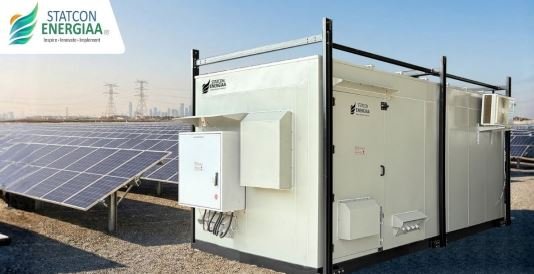
This is also driving a broader transition in how power infrastructure is being designed. The focus is moving from centralised generation to distributed, intelligent energy systems, where storage plays a critical role. Modular, containerised BESS solutions are increasingly being deployed closer to consumption points, allowing for scalable and responsive energy management. This reflects a shift from treating storage as backup to recognising it as core infrastructure.
Energy security, therefore, is no longer confined to national reserves or international supply agreements. It has moved into the design of the power system itself. The ability to store, control, and dispatch energy is becoming as important as the ability to generate it.
In this evolving landscape, BESS is not just supporting India’s energy transition; it is enabling it to function reliably. And in a world where both supply and demand are becoming more unpredictable, that reliability is no longer optional.