




The Fraunhofer Institute for Solar Energy Systems ISE has launched its groundbreaking “PVgoesMV” initiative, marking a major technological advance in photovoltaic (PV) power systems.
The project aims to build and operate the world’s first medium-voltage PV plants equipped with 3 kV string inverters, demonstrating that moving to medium-voltage operation is both technically viable and economically beneficial for utility-scale solar farms.
Under the three-year PVgoesMV project, two pilot installations are being established in Germany’s Baden-Württemberg and Rhineland-Palatinate regions. Each pilot will have an approximate capacity of 135 kW, with system configurations operated at 3 kV on the DC side and 1.2 kV on the AC side. These medium-voltage systems leverage advanced silicon carbide (SiC) semiconductor technology developed in Fraunhofer ISE’s earlier MS-LeiKra research project.
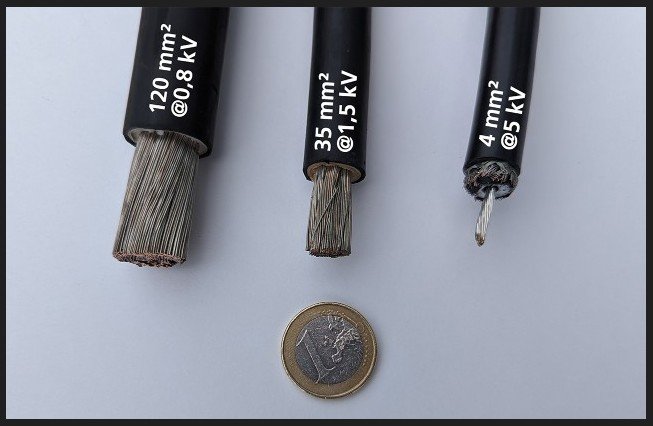
Raising PV system voltages into the medium-voltage range promises significant reductions in material use and investment cost by decreasing current and, therefore, the size of cables and other balance-of-system components. As global photovoltaic capacity is projected to expand by tens of terawatts by 2050, such innovations could materially ease the demand for critical raw materials like copper and aluminum.
The project involves collaboration with a broad industrial consortium that includes energy producers, component manufacturers, and engineering partners, all contributing technology, components, and field-testing support. Fraunhofer ISE will leverage insights from the pilot plants to inform quality assurance, testing standards, and system design for future medium-voltage PV deployments.
By validating medium-voltage PV technology in real-world conditions, the PVgoesMV project seeks to accelerate a shift toward more resource-efficient solar power plants, addressing material scarcity and cost challenges in large-scale renewable energy systems worldwide.